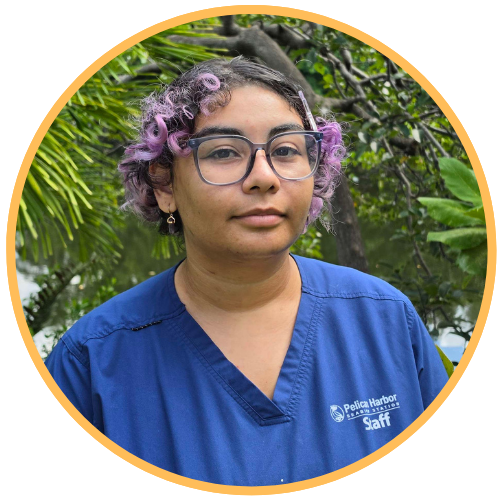
Mercy torres - wildlife rehabilitator
I found my way into wildlife rehabilitation somewhat unexpectedly! Originally, I studied psychology and criminal justice with the goal of helping others, but it wasn't until I began volunteering with wildlife that I found the passion I wanted to pursue long-term. What started as an interest in working with animals ended up renewing my passion for conservation, which then grew into a love for the field's opportunity to make a difference for the animals that live around us. I've now spent about four years in wildlife rehabilitation gaining hands-on experience caring for a wide variety of species and helping them through the challenges that can come with recovery.
My background in psychology has shaped the way I approach animal care, particularly in understanding behavior and recognizing signs of distress. Wildlife can be remarkably good at hiding signs of illness or injury, so sometimes it's the smallest changes in behavior that end up telling us the most about what's going on. I tend to pay close attention to those subtle differences, whether that's a change in activity, in social behavior, or in an animal's usual mannerisms. I find it fascinating how much we can learn by simply observing their natural behaviors, and I believe recognizing when something is even slightly out of the ordinary can make a meaningful difference in their care!
My appreciation for animals and the natural world in general has been a constant throughout my life, so finding a career that allows me to put that passion into practice felt like a natural fit. Throughout the past few years I've learned more about wildlife and the challenges many of our native species face! And with that new knowledge, my passion about advocating for their protection has only grown. I believe every species, regardless of size or public appeal, plays an important role in maintaining a healthy ecosystem, and that understanding is something I carry with me in both my work and everyday life.
I believe that wildlife rehabilitation and education go hand in hand. Helping an animal heal and return to the wild is incredibly rewarding, but preventing the circumstances that caused its injury in the first place is just as important. Rehabilitation can help the animals in front of us, while the knowledge and acts of everyday people can help protect the animals we may never see. I'm grateful to be part of a dedicated team that shares these values and to contribute to a mission that makes a difference in both areas. Protecting wildlife takes all of us, and even small changes in how we interact with the world can make a lasting difference!