Intern Blogs

Keeping Your Dog and Our Wildlife Safe!

Written by: Meredith Molinari, Wildlife Intern

With the weather in Miami finally cooling down a bit, it’s a great time to enjoy some outdoor fun with your furry family member. Picture this. You and your pup are having fun playing fetch in the park when suddenly, they spot something more interesting than that tennis ball. They dart away from you, and before you can yell stop, they have a small feathery or furry creature in their mouth. Oh-no! 

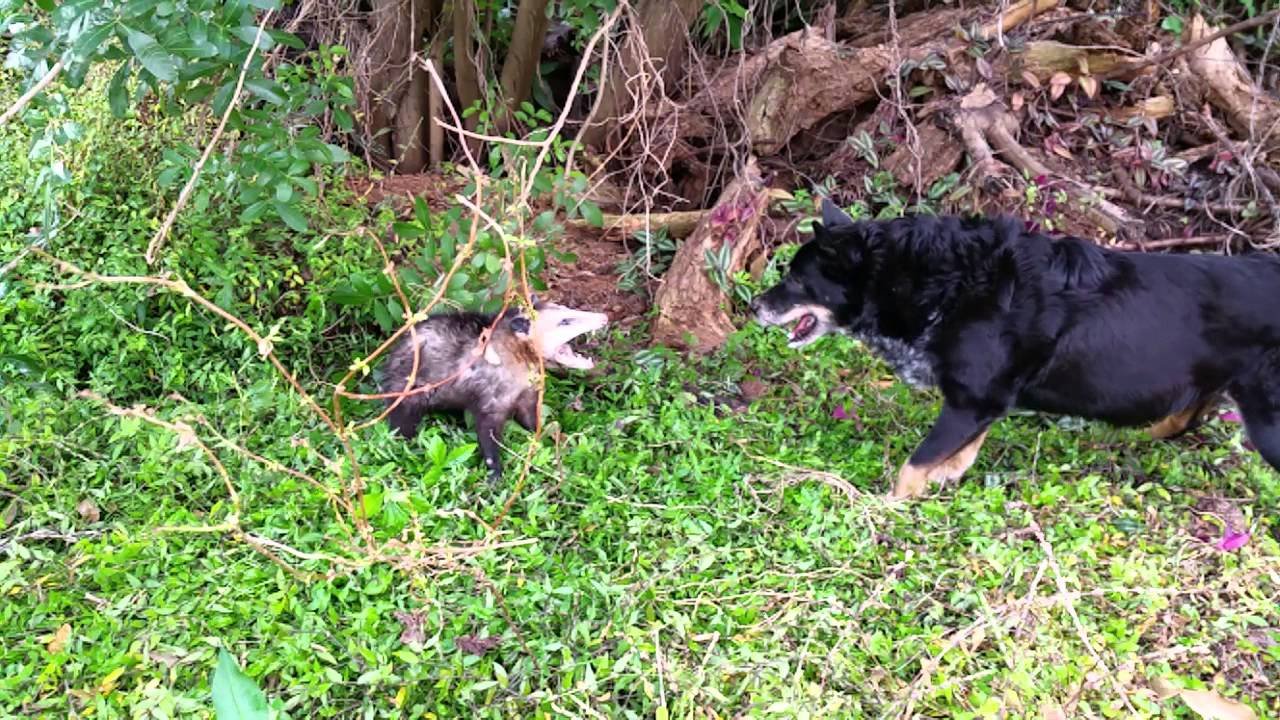
In my time as an intern with Pelican Harbor Seabird Station, I have seen numerous opossums and birds come in with wounds resulting from a dog attack. It is not the dog’s fault. Although they are domesticated animals, they still have wild instincts. As we are lucky enough to be surrounded by amazing wildlife here in South Florida, it is our job as dog owners to keep both our pets and our native wildlife safe. 

As the owner of three dogs, I know how necessary it is for dogs to get outside and run off some energy. It is important for both their physical and mental health. Since not everyone has access to a fenced-in backyard, local parks are a great option. 

Here are some easy safety tips to follow when taking your dog to the park: 

  1. Always check park regulations. Many county parks in Miami-Dade do not allow dogs. While this might be annoying to dog owners. It is often for the benefit of the surrounding wildlife. Dogs can easily disturb ground nesting sites. The presence of dogs can cause serious anxiety in prey animals and disrupt their breeding and migratory behavior. 

  2. If dogs are allowed in the park, follow posted leash laws. Always keep your dog on-leash. No matter how good you believe your dog’s recall is, instinctive behavior is hard to break when their prey drive is heightened.  A leash of no more than 6 feet in length is best. This gives the dog space to walk while keeping them close enough, should you need to remove them from an area quickly. Carry high-reward treats in your pocket or bag while leash-walking in the park. This way you can redirect your dog’s attention if they focus on a smaller prey animal. 

  3. The best park option is a dog-friendly park or off-leash “Bark Park.” These parks are specifically designed with dogs in mind. They are placed in park locations away from wild areas limiting interaction with the native species. You can find links to dog-friendly parks at the end of this post. 

What about at home? Wildlife often appears in our own backyard. These tips ensure your dog, and our native wildlife can peacefully coexist. 

  1. Never leave food outside unattended. Especially overnight. Until I began interning at Pelican Harbor, I had no idea what a tasty treat pet food is to opossums. They absolutely love it. By leaving food out during the day for your dog to munch on, you might be unintentionally inviting opossums into your yard after dark. Always dispose of uneaten pet food in trash cans with secure lids.

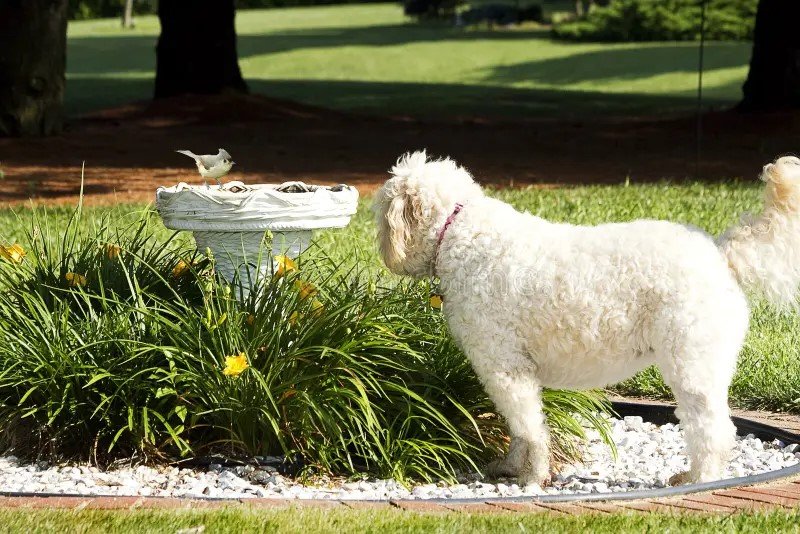
  2. Think carefully about where to place your birdbath and feeders. I love having a bird feeder in my yard where I can admire the Blue Jays, Mourning Doves, and Northern Cardinals that stop by and visit. Position your bird feeder in an area of the yard that your dog cannot easily reach. Remember, squirrels love bird feeders too, and can be easy prey for dogs. Keep the area below the feeder clean. Do not allow your dog to ingest bird seed or bird droppings that accumulate below the feeder, as they may contain bacteria that will make your dog sick.

  3. Make sure your dog is up to date on all their vaccinations. This is the best preventative step you can take for your dog’s health. 

Even if you follow all these precautions, accidents can happen. If your dog attacks native wildlife, Pelican Harbor Seabird Station is here to help. They have multiple resources on their website for your benefit. Start with their page: “what to do if you found an injured animal”

Play safe outdoors and take your pup to a dog-friendly park or off-leash Bark Park! My favorite is at Tropical Park. It has two separate areas for large and small breed dogs. Hopefully, my energetic goldendoodle and I will see you and your furry bestie there some Saturday morning.

Check out: Dog Friendly parks in Miami-Dade County. 

Photo Descriptions & Sources

Our Valuable Vultures

Written by: Lucy Wiedmar, PHSS Intern

We’ve all seen it - the ominous collection of large birds gliding high in the sky, seemingly flying in circles around a concentrated area. Often thought to signal that death is near, you ask yourself what the unlucky soul had to endure. The soaring birds in the distance, flying in their ritualistic circles, cruising the wind currents, are most likely members of the new world vulture family.

Florida is home to two native species of vultures, the Black Vulture (Coragyps atratus) and the Turkey Vulture (Cathartes Aura). Both vulture species are in the taxonomic order Accipitriformes (which includes most diurnal birds of prey), and the family Carthartidae (consisting of five new world vulture species.) These two species can be differentiated by the distinct difference in head coloration, with black vultures having a solid black coloration on the head and bill, whilst the turkey vulture differs in a red/pink coloration of the head and a white-toned bill. While in the air, these two vultures can be identified by the difference in flight patterns observed among the two. The black vulture has a much more compact body with a shorter tail, a whitish patch on the outer primaries, and displays a powerful and sturdy 3-5 wing flap pattern. The turkey vulture on the other hand has a greater white-silver coloration along the lower border of their wingspan and tends to teeter while in flight, displaying significantly fewer wing flaps. 


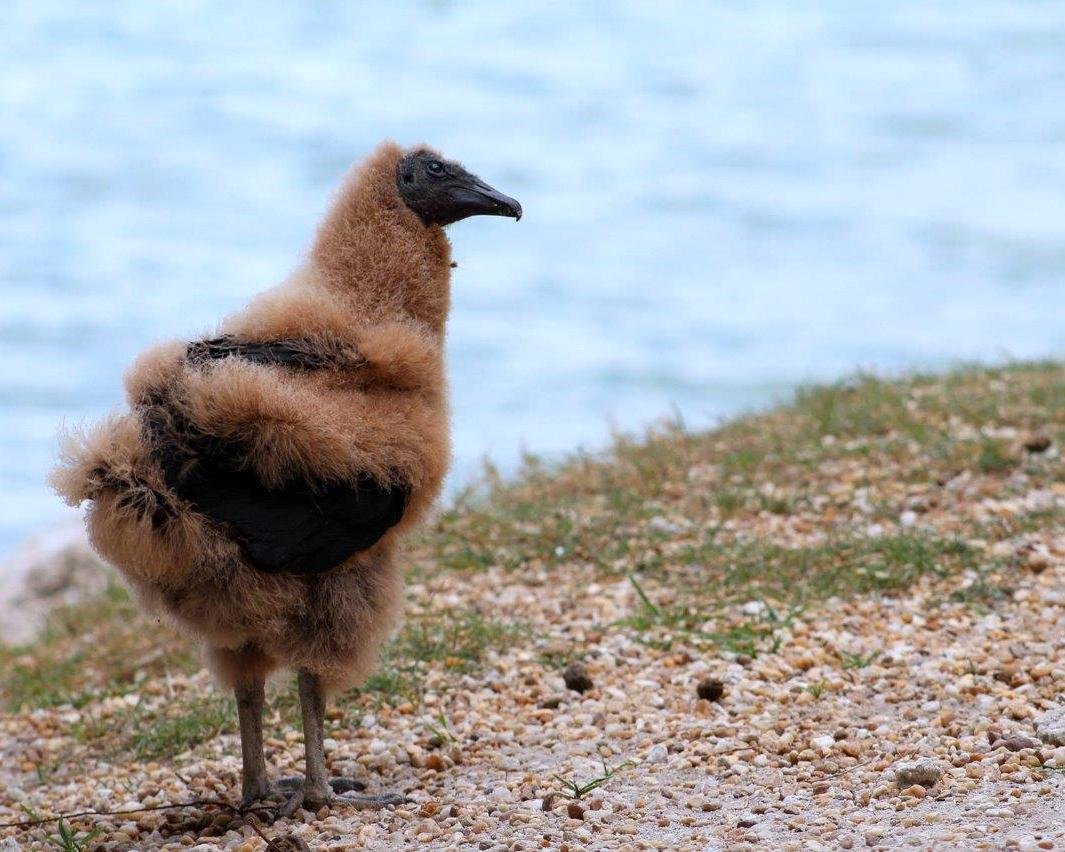
Adult Black Vulture feeding her fledgling.

Adult Turkey Vulture rescued by PHSS volunteers.


Although turkey vultures currently outnumber their black vulture relatives in the United States, black vultures have a greatly expansive native range, outnumbering turkey vultures in the western hemisphere. Year round, black vultures can be located across virtually all of the South American continent up to the southern and eastern United States. Over the past few decades, black vultures have crept their way even further northward - as far north as New England. Turkey vultures have a similar native range, found essentially across all of the South American continent, as well as encompassing almost the entirety of the United States.

While these two species of vultures differ in many aspects, they are very similar in one main regard: their choice of prey - which happens to be most prominently the carcasses of the once living. Due to vultures' feeding behavior relying mainly on carrion, they tend to be associated with negative connotations in the media and are often portrayed in a more “sinister” light, often being depicted as unhygienic or a precursor to death. Even Charles Darwin, the father of evolution, once called the birds “disgusting creatures”. Vultures get a bad rep in the Animal Kingdom, and due to the unwarranted stereotypes placed upon them, there are a lot of misconceptions floating around these birds.

However, I am here to defend the honor of our native vultures! Contrary to the stigmatization of vultures bringing along the notion of death with their presence, they actually play a crucial role in the health and stabilization of their ecosystems. Vultures play an incredibly important role by devouring decaying carcasses. By consuming flesh from the recently deceased, vultures are able to reduce and/or eliminate the spread of certain diseases, pathogens, and harmful bacteria that depend on rotting flesh to grow, develop, and spread. Some of the illnesses prevented by vultures' ecological role are anthrax, rabies, and cholera. Additionally, vultures' diet on carrion further facilitates nutrient cycling by maintaining high fertility among soils for plants to flourish, keeping the overall primary producers of our ecosystems healthy and thriving. 

Because vultures are known “ground nesters”, they prefer to lay their eggs and raise their young in locations such as dark crevices, caves, hollow trees/fallen logs, abandoned buildings, brush piles, etc. Due to these nesting locations being significantly different than the depicted nesting behavior we see in many other birds (ie. collection of sticks, twigs, and leaves in high, out-of-reach areas), people may stumble across a clutch of young vultures and mistakenly believe they have fallen from their parents' reach. In the past, many people have “rescued” and brought in healthy, young vultures to Pelican Harbor with good intentions, but in reality are displacing these chicks from where they are supposed to be. 


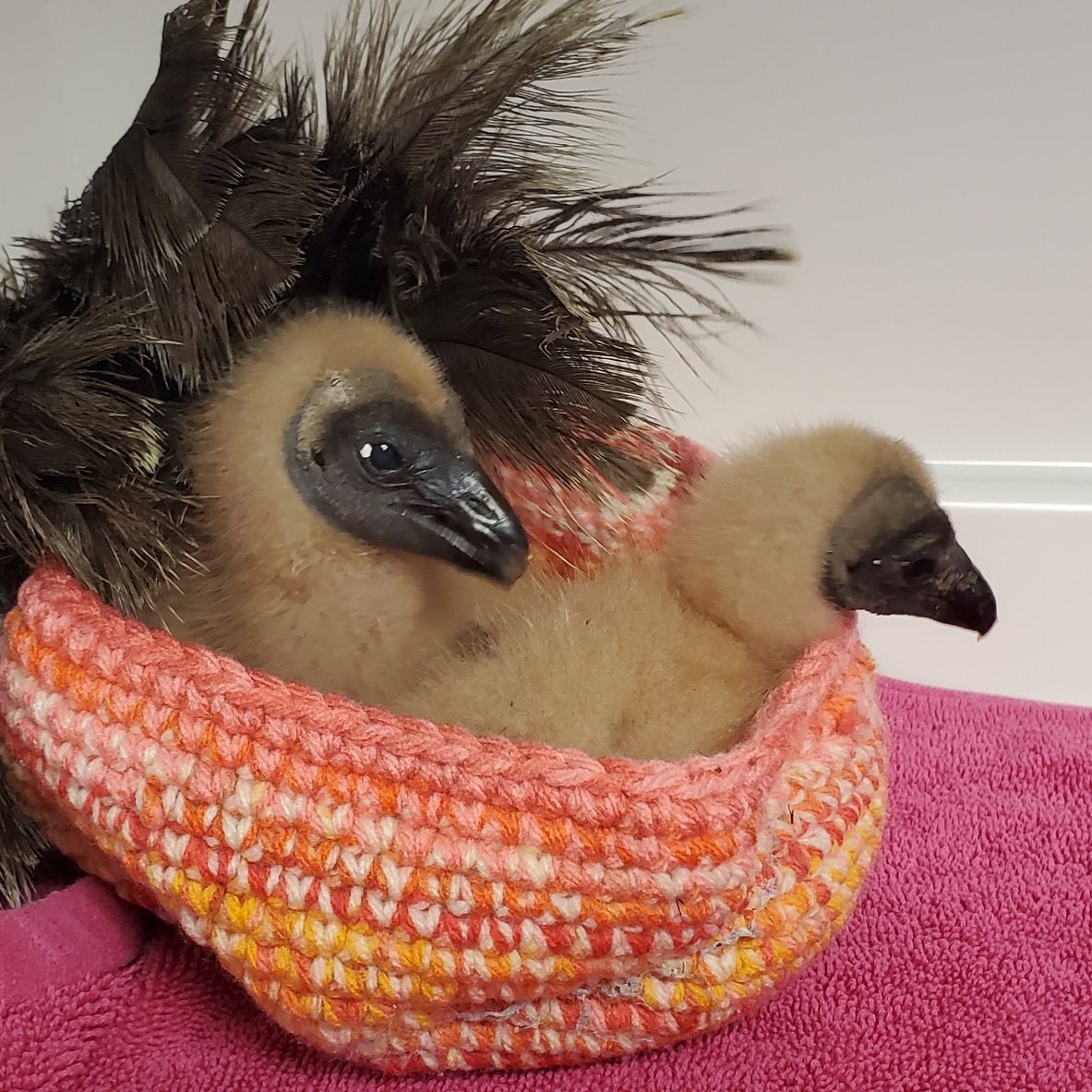
Pictured above are two black vulture chicks that were brought into our clinic due to the mistaken removal from their nest

If you ever happen to run into a nest of juvenile vultures, never intervene unless absolutely necessary. Call Pelican Harbor or another wildlife rehabilitation center and see what steps to take next after finding the nest. Experts will be more than happy to assist in these situations, and will help to avoid any unnecessary disturbances!

With that being said, the next time you stumble across our large, bald, funky-looking friends chowing down on their favorite slice of roadkill, take your eyes of disgust and transform them into eyes of admiration! Instead of feeling repulsed, express gratitude to our native vultures for protecting us and our surrounding ecosystem from the harmful spread of disease. And remember, if you happen to stumble across a nest of our baby vulture friends, first call your local wildlife rehab center to help guide you through the best options based on the current situation.

References

Cats: Our Friends, Their Foes

Written by: Nicholas B. Canino, PHSS Intern

Cats are one of the most popular pets in the United States, with about 43 million households owning at least one. Their quirky personalities, neverending curiosity, and admirable features make them delightful pets to have. It is also common knowledge that these enthusiastic critters are not nearly as domesticated as dogs and still have a “wild side” to them. Much of their time is spent hunting toys on a string, pouncing on their owner’s hands, and gnawing on whatever they can get their paws on. Unfortunately, this can lead to a major issue for native animals on the receiving end of their wild nature.

Many cat owners think that it is essential to allow their cats to have free access to the outdoors around the neighborhood. This is due to a common misconception that cats require time outdoors in order to live a healthy life, but in reality, it has the opposite effect. But whether owners decide to leave them outside overnight, during the day, at all times, or even for short periods of time, these cats can do severe damage to the native wildlife that also calls that neighborhood home. Instead of having toys to hunt while inside, cats that are outdoors will choose to hunt a variety of native animals including lizards, birds, and small mammals. Many of these animals end up severely wounded or dead as a result of the cat's wild instincts.

Of course, cats are not to blame for simply complying with their natural behavior. In nature, these cats would be able to hunt and the populations of these animals would not decline so significantly. However, because of the increasing population of feral and outdoor cats in the United States, many native populations are not able to keep up. In some regions of the world, cat populations can be directly attributed to the extinction of numerous species. One study in 2013 found that domestic cats in the U.S. kill an average of 1.3 to 4 billion birds and 6.3 to 22.3 billion mammals annually. This unfathomable number of wildlife killed each year solely from domestic cat predation is why many wildlife ecologists believe cats are a greater concern for biodiversity than deforestation or climate change.

For a long time, cat owners have overlooked the impact that their precious pet is having on their local environment. Many owners will refute this argument by stating that they feed their cats a sufficient amount of food to stop them from hunting. But, has a cat ever stopped hunting toys on a string because it was full? Likewise, many owners say they have only seen their cat bring home an animal once or twice. But, for every animal they bring home, a few were left where they were killed and many more were severely injured and left to die. That is where Pelican Harbor Seabird Station comes in.

Over the past few years, Pelican Harbor has better tracked the circumstances of admission for many of our injured and sick animals. Since 2019, we have had nearly 500 animals come in that were attacked by a cat. About 75% of these animals were birds such as Northern Mockingbirds and Mourning Doves. The other 25% includes mammals like baby opossums and squirrels that we frequently get in the summer months. Cat attacks are the second most frequent reason why animals are brought to us for treatment. Unfortunately, the survival rate for these animals is very low with less than 50% of birds surviving to release. This is due to a potent bacteria that cats carry called Pasteurella multocida, which left untreated has a grace mortality  rate. Our treatment for patients attacked by cats includes strong antibiotics to avoid infection, laser treatment for pain, and wound repair and cleaning if necessary.

Because of the high occurance of cat attacks, there is a lot that we can do at Pelican Harbor to improve the situation for our native animals. Educating guests on the consequences of leaving their cats outdoors is one of the most impactful methods we can use to reduce the negative effects of outdoor cats. We always recommend that people leave their cats indoors and only allow outside access if there is an area where wildlife cannot get to, like an enclosed patio. Not only does this ensure that our wildlife is protected, but that our cats are safe as well. While we do our part to treat our wildlife, make sure you are doing your part to protect them too!


References:

Are outdoor cats happier? - Animal Humane Society

The impact of free-ranging domestic cats on wildlife of the United States - Nature

Saved by the Power of Light

Written by: Milena Orjuela, PHSS Intern

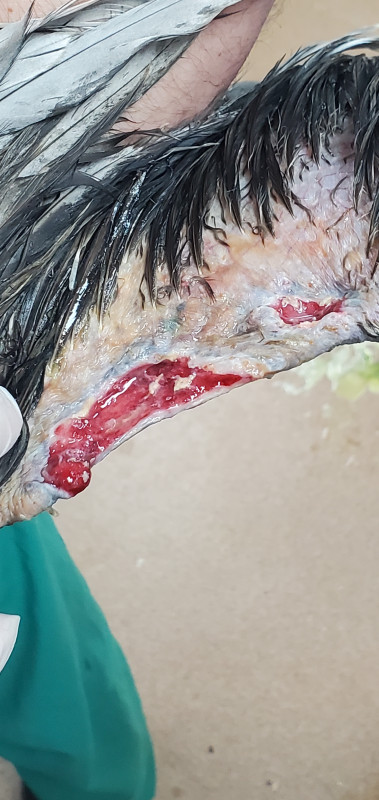
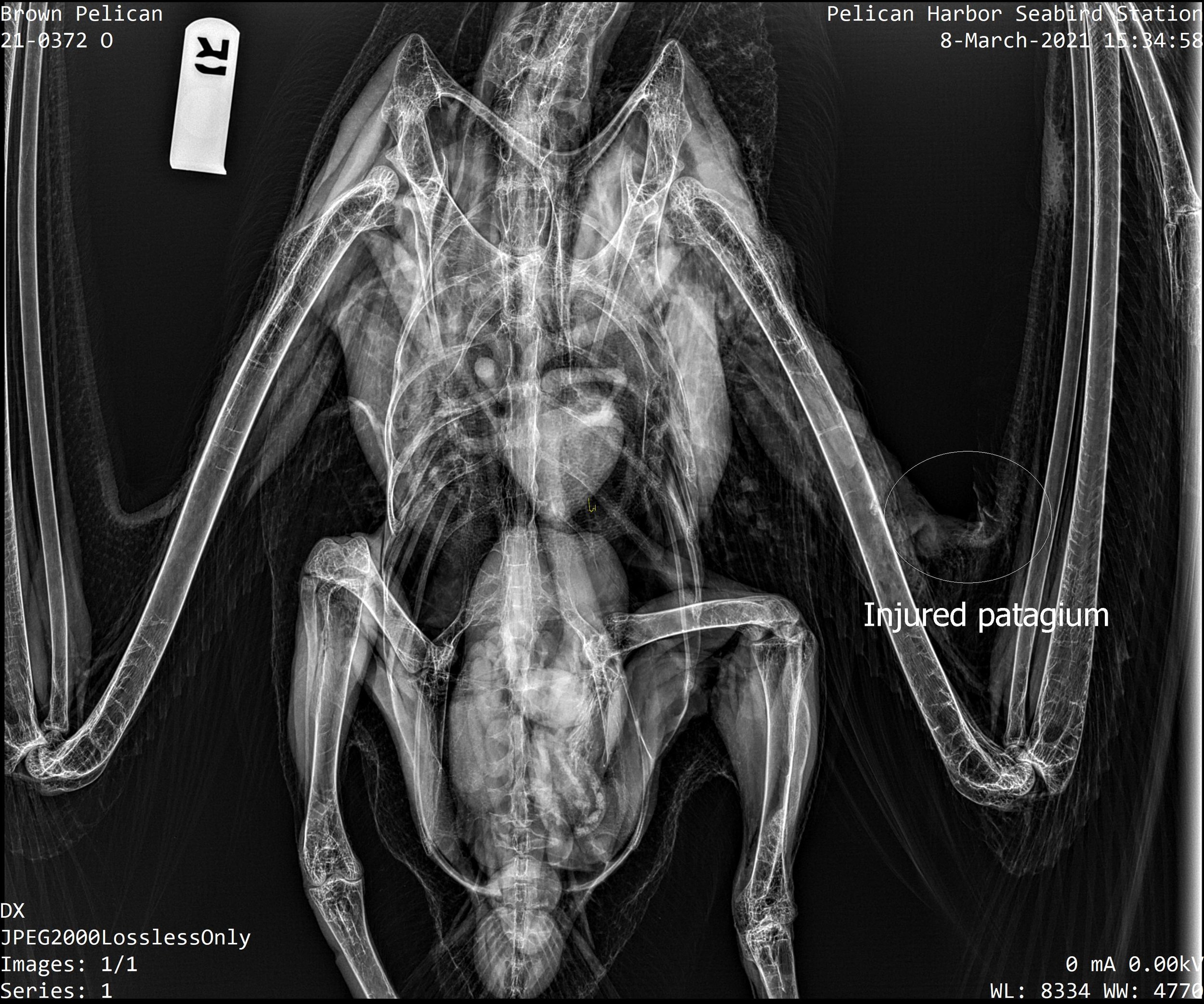
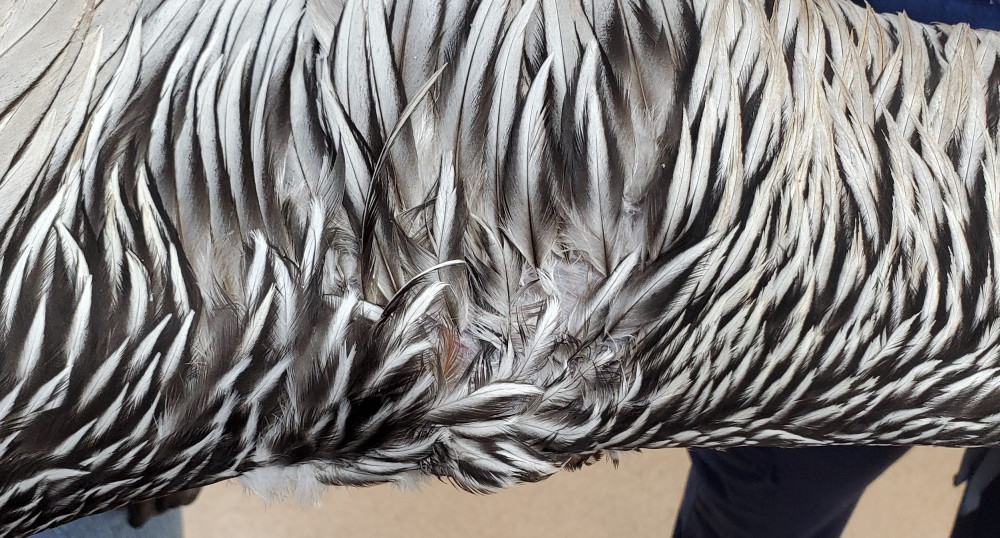
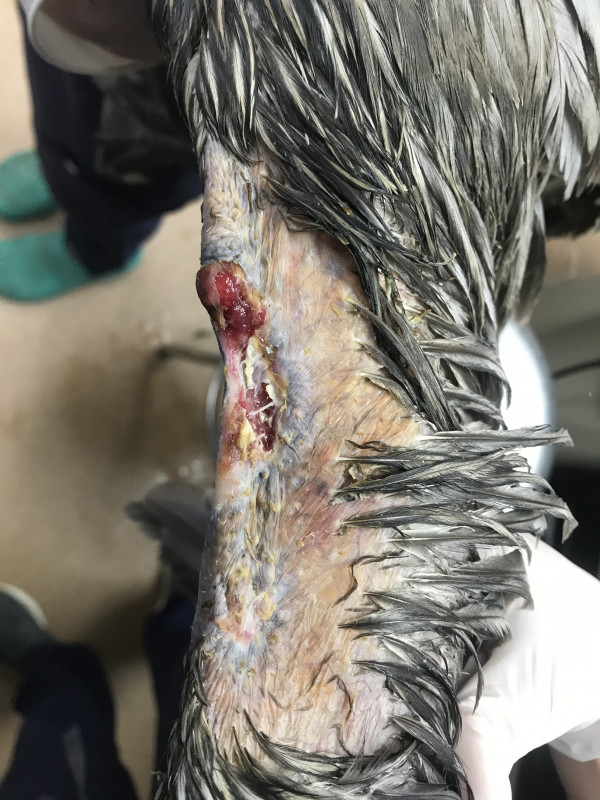
Pelicans are meant to glide through the sky, dipping in and out of the ocean on a sunny day, and leaving your jaw dropped if they happen to catch a fish near you. That is what I thought until Pelican 21-372 came to our clinic. After taking a quick glance at the bird, I secretly thought to myself, “you are doomed.” Pelican 21-372 first came into our care after being spotted with monofilament entangling its left wing, upper body, and head. It was obvious upon examination that the bird was also malnourished and dehydrated. Our staff noted multiple open wounds in its face, abdomen, legs, and a large malodorous wound on the left patagium. A malodorous wound is characterized by necrotic tissue, or bacterial colonization, often containing both anaerobes and aerobes and is a major obstruction to healing. The patagium, the site of the open wound, is a web of elastic fibers that extends from the head to the wrist and has the very important job of assisting birds in gliding and flying. Such a grave injury on a crucial part of the bird’s wing is why Pelican 21-372’s chances were initially seen as quite poor. 

A set of X-rays determined that there were no fractures or broken bones to deal with in addition to the obvious open wounds. Subcutaneous fluids were given to aid with dehydration, antibiotics, pain killers, anti-inflammatories, and Vitamin E were administered to help the healing process, and the pelican was given one dose of anti-parasitic medication. All wounds were thoroughly cleansed and special care was given to the left wing. All dead tissue was removed from the patagium, a topical antibiotic ointment was administered, and the wing was wrapped. Though the physical treatments and medications certainly had a very beneficial role in healing the bird, the laser therapy Pelican 21-372 received is what really allowed such a miraculous recovery. 

First developed in 1960, laser therapy can heal major injuries at a cellular level by stimulating a process called photobiomodulation. Photobiomodulation or PBM works as photons enter the tissue and interact with the Cytochrome C complex inside cellular mitochondria. The absorption of light by the Cytochrome C oxidase helps the cells to increase the production of Adenosine Triphosphate (ATP), which is the intracellular energy transfer molecule. This helps to restore the oxidative process which allows the cells to resume normal functions, preventing cell death and associated complications. Additionally, laser therapy can stimulate the production of free nitric oxide (NO) and reactive oxygen species (ROS), which is a powerful vasodilator, and an important signaling molecule, respectively. Together, these chemical compounds and molecules can promote faster signaling, decreased edema, reduced inflammation, and a faster healing process. Looking at the body as a whole, PBM causes a beneficial systemic effect by expanding cellular proliferation, improving microcirculation in the tissue, and inducing growth factor production. Because the results of photobiomodulation are very dose-dependent, the strength of the therapy is selected according to the patient’s clinical presentation. High frequency (above 500hz) penetrates shallow tissue which will inhibit pain, swelling, and nerve damage. In contrast, lower frequency (under 500Hz) targets deeper tissue which speeds the healing process and is specifically used when reproduction of new cells is required.

In this case, our beloved Pelican 21-372 received low-frequency laser therapy, during which 50Hz were administered throughout the treatment. As hoped, the laser therapy significantly improved wound proliferation with comfort and ease. Treatment times should be reduced as healing begins and the injury begins to show improvement. For example, if a 3” incision takes 3 minutes to treat, then a 2” one would take 2 minutes. Any additional photons delivered over the required dose will then become inhibitory, creating a plateau in the healing process. Physical treatments, medication, and the impressive work of the laser therapy made the wound healing so significant that pelican 21-372 was described as a “healing machine” by one of our staff members. Within 16 days of admission, the pelican was spending time outside in the sunny weather, and even flying around the enclosure. It was then that the final round of antibiotics and pain killers were administered, to allow for a few more days of active healing. Although the wound was healed, the Brown pelican needed more time to regain full extension of the wing. Without full extension of the patagium, the bird would not be able to fly. To help the Pelican on the path to regain full extension and fly our staff would do physical therapy on the patient as well as allow the patient to do its own physical therapy by being outside. After nearly four months of this arduous job, all of our efforts yielded great results and Pelican 21-372 was able to be released. Next time you are at the beach and see a pelican flying by, remember that wildlife is precious and take pride in knowing they will be protected and cared for!