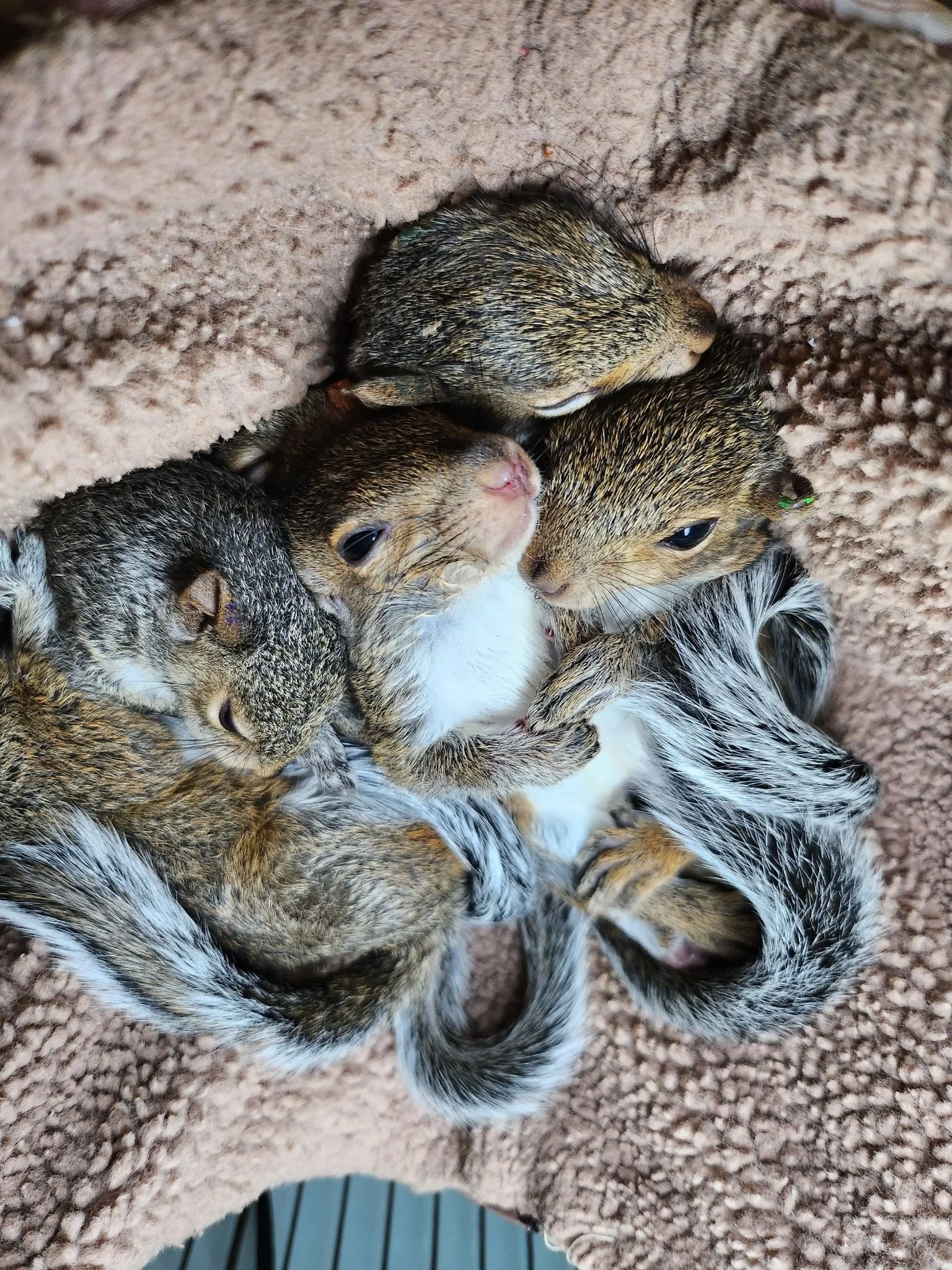
By Anika Schmid
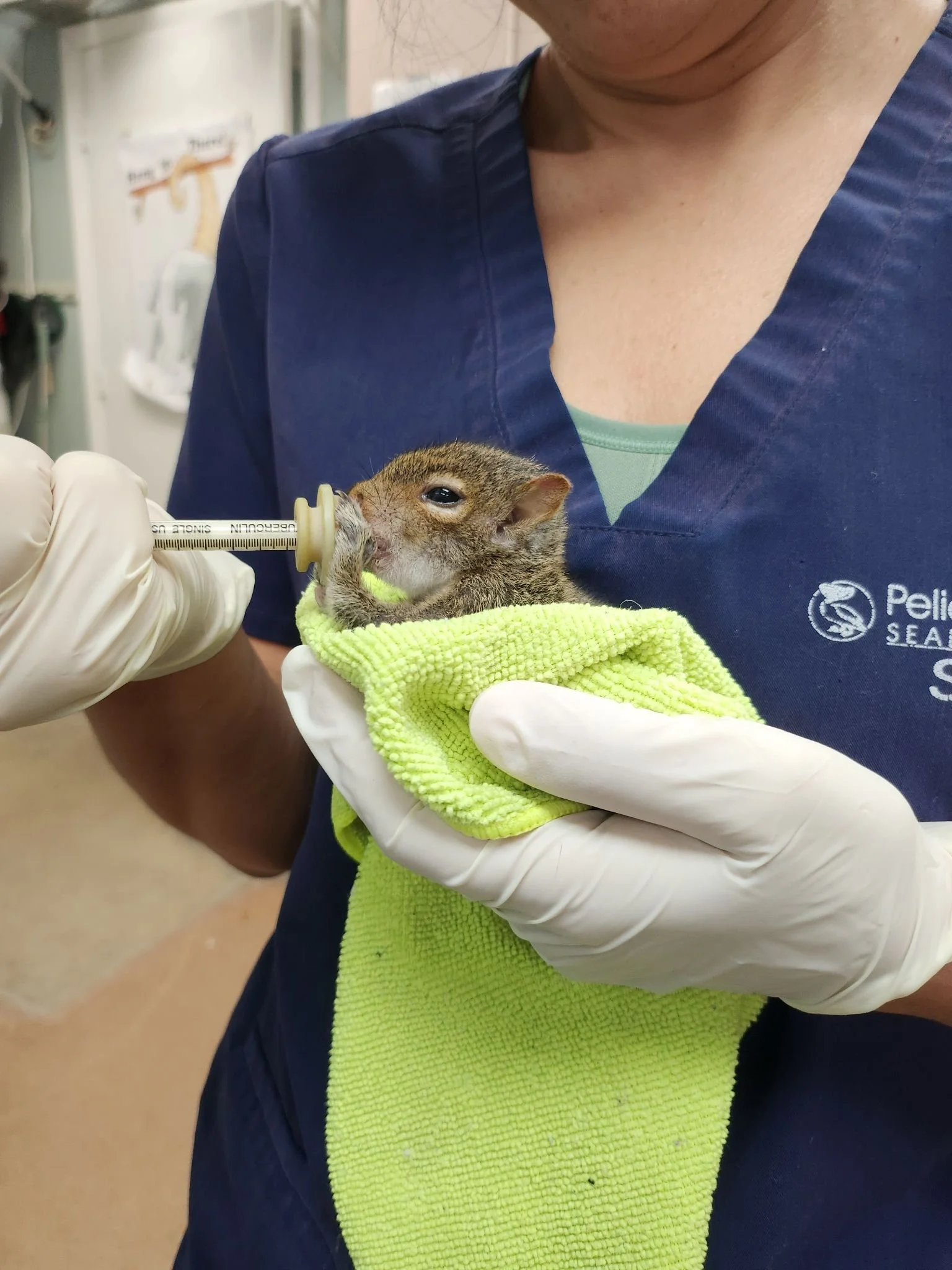
A baby squirrel held in the hands of a PHSS staff member.
It can be easy to assume that a baby squirrel has been abandoned or orphaned, but often these squirrels may just need some help reuniting with their parents. Follow the steps below to determine if the baby squirrel you found needs to be brought into care at a local wildlife rehabilitation center.
Pelican Harbor Seabird Station is open every day from 9 AM to 5 PM. We have 24-hour drop-off cages for rescues outside of our business hours. Call our wildlife hotline at (305) 751-9840 for additional assistance.
Reminders for Handling Animals
Never feed or give water to an injured, sick, or orphaned animal. Feeding or providing water to animals, especially babies, can lead to serious medical complications.
If you have the animal contained, make sure it is in a comfortable box with air holes. Contained wildlife should be kept in a dark, quiet place with no human interaction.
Stress is a major cause of death for injured wild animals. An animal that seems calm around you may actually be experiencing extreme stress.
Wild animals are not accustomed to being handled by people or around loud talking, noisy children, or pets. Do not try to hold or pet them.
Determining the Baby Squirrel’s Condition
A baby squirrel’s best chances of survival are with the mother.
Place the baby in a dark, warm box and contact your local wildlife rehabilitation center if you find a baby squirrel affected by the following:
visible wounds or injury
bleeding
shivering
vomiting
attacked by a cat or dog
cold and wet
covered in flies or ants
Determining the Age: Baby Squirrel or Juvenile Squirrel
If the squirrel has a bushy tail and a body longer than six inches, it is a juvenile squirrel. It should be left alone or placed on the nearest tree if it is approaching people.
If the squirrel does not have a bushy tail and body longer than six inches, follow these steps:
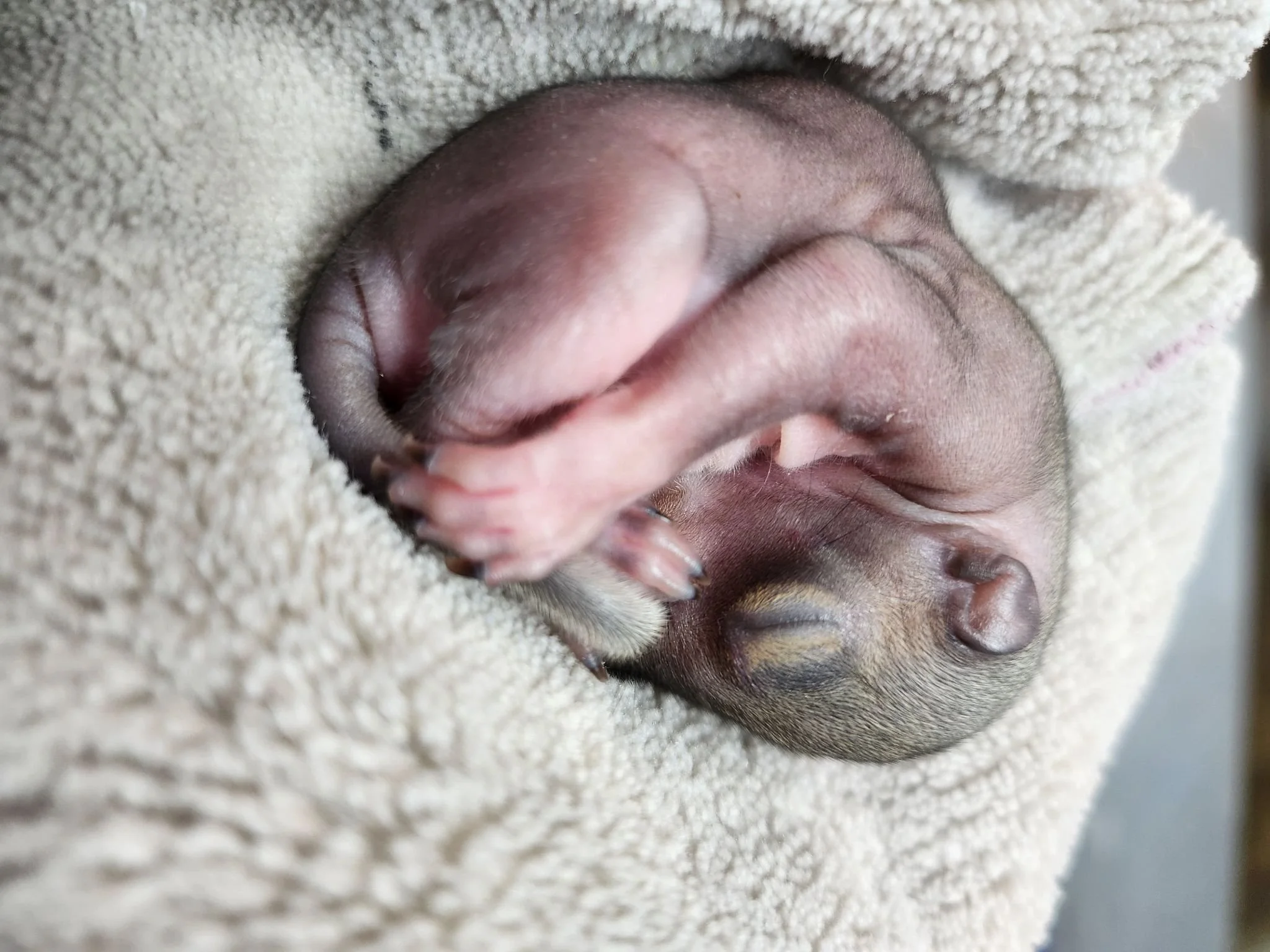
A pink baby squirrel with little hair and closed eyes.
Place the baby in a small open box, if it is cold, do so with a gently warm water bottle or rice sock. Ensure that the box has holes for drainage in case of rain, and do not use cardboard which may soak and fall apart.
Place the box at the base of the tree nearest to where you found the squirrel.
If there are cats or other animals around, you may fasten the box above the ground at chest or eye level, either by nestling it between branches or strapping it to the tree trunk with string or bungee cords.
Observe from a distance for the next 12-24 hours.
If the mother returns, you can leave the area as the baby is okay. If the mother does not return, place the baby in a dark, warm box and contact your local wildlife rehabilitation center.
Finding a Local Wildlife Rehabilitator
To find a wildlife rehabilitator in your area, check the Humane World for Animals directory.
If you are unable to reach a wildlife rehabilitator, call your state wildlife agency or a wildlife veterinarian. If you are unable to reach any of these, see the instructions below for rescuing baby squirrels.
Steps for Rescuing Baby Squirrels
Only adults should rescue baby mammals. Before rescuing adult mammals, seek guidance from a wildlife rehabilitator.
The steps below are adapted from Healers of the Wild: People Who Care for Injured and Orphaned Wildlife by Shannon K. Jacobs.
Prepare a container. Place a soft cloth on the bottom of a cardboard box or cat/dog carrier with a lid. If it does not have air holes, make some. For smaller animals, you can use a paper sack with air holes punched in.
Protect yourself by wearing gloves if possible. Some animals may bite or scratch to protect themselves, even if sick. Squirrels can pass diseases to humans and pets, along with parasites such as fleas, mites, or ticks.
Cover the squirrel with a light sheet or towel.
Gently pick up the squirrel and put it in the prepared container.
Warm the squirrel if it’s cold out or if the animal is chilled. Put one end of the container on a heating pad set on low. You could also fill a zip-top plastic bag, a plastic soft drink container with a screw lid, or a rubber glove with hot water. Wrap the warm container with a cloth and put it next to the squirrel. Make sure the container does not leak or the squirrel will get wet and chilled.
Tape the box shut or roll the top of the paper bag closed.
Note the exact location where you found the squirrel. This will be very important for release.
Keep the squirrel in a warm, dark, quiet place away from children and pets. Leave it alone; don’t handle or bother it. Don’t give the squirrel food or water unless you are directed to do so by a licensed wildlife rehabilitator. Different species require different diets, and improper feeding can injure the baby and cause more harm than good.
Contact a wildlife rehabilitator, state wildlife agency, or wildlife veterinarian as soon as possible. Don’t keep the squirrel at your home longer than necessary. Keep it in a container and do not let it loose in your house or car.
Wash your hands after contact with the squirrel. Wash anything the squirrel was in contact with — such as a towel, jacket, blanket, or pet carrier — to prevent the spread of diseases and/or parasites to you or your pets.
Get the squirrel to a wildlife rehabilitator as soon as possible. The faster the squirrel is cared for by a permitted rehabber, the better the chances for its survival.
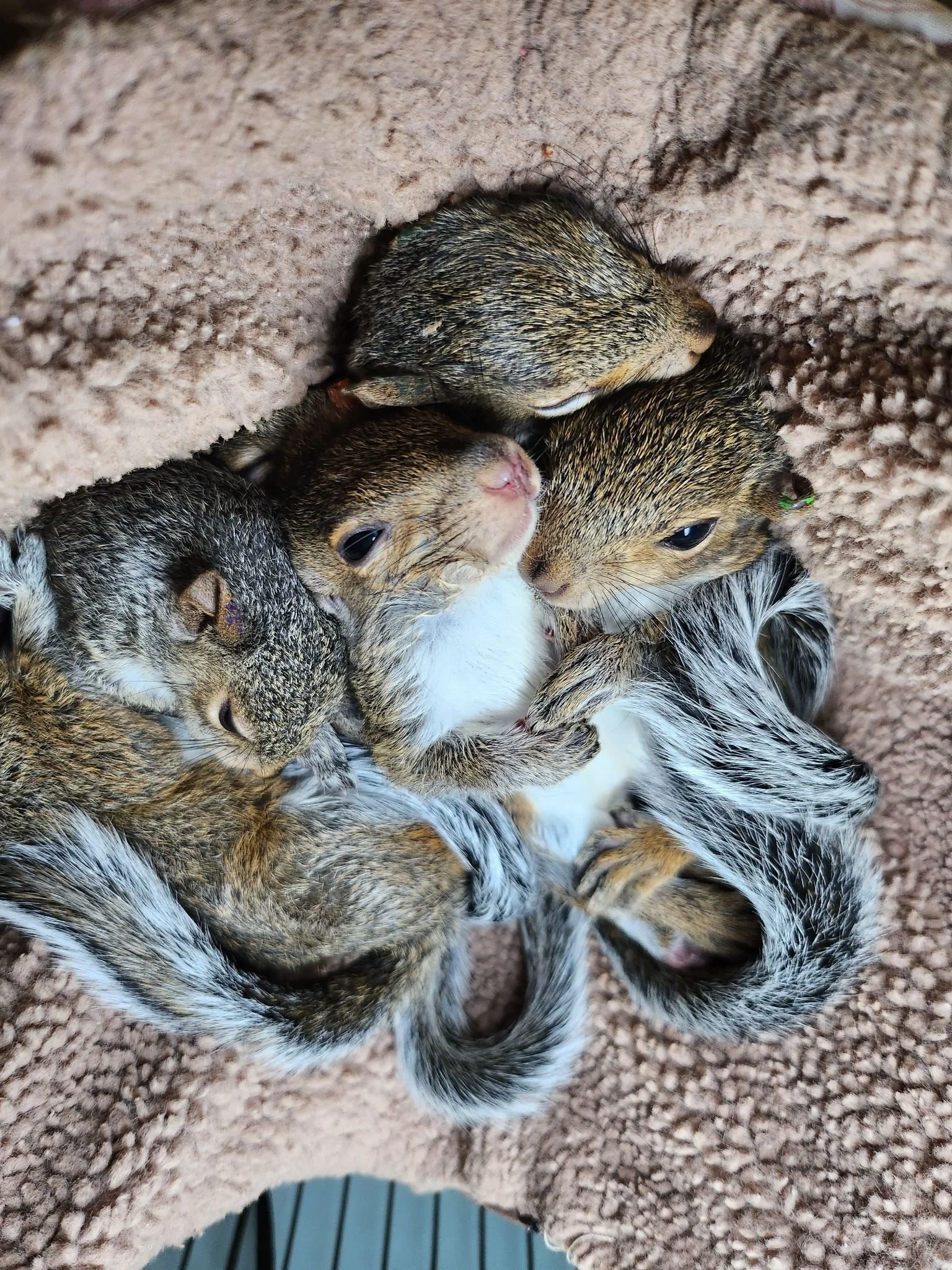
Four squirrels in a pile.
Call PHSS at (305) 751-9840 to bring a patient to us or be directed to your nearest wildlife center. We are open every day from 9 AM to 5 PM. We recommend that you keep babies at home overnight and bring them in the next morning.