Overview of Pelican Harbor Seabird Station’s 2024 Data

by Anika Schmid

Rescuing Miami’s Native Wildlife” was held on January 15, 2025, and hosted by Yaritza Acosta, the Rehabilitation Manager at Pelican Harbor Seabird Station (PHSS). As part of our monthly Natural History Speaker Series, the presentation recapped our 2024 data, including the animals with the highest intakes and reasons for admission. The key trends from last year reveal the vital role that rehabilitation plays in wildlife conservation. This data is also available in the 2024 Annual Report.


2024 Intakes

In 2024, PHSS treated 2,476 patients from 148 species. We received approximately 7,817 calls from the public throughout the Miami area, with Miami Beach having the largest amount of intakes.


April was the month with the highest number of intakes, 292, because it was the peak month for the spring baby bird season. Most calls were for injured, orphaned, or kidnapped baby birds. October saw a spike of 266 patients admitted because of fall migrants. During this month, we often receive calls about animals that have been injured or are suffering from migration fatigue.


Intakes by Class

With 1,649 aves, 792 mammals, and 35 reptiles, every class had more intakes in 2024 than in the last two years. The most common type of avian was songbirds, with 745 intakes. Songbirds are the biggest order of birds and have the most subspecies. Baby bird season sees an influx of nests falling from trees and babies getting hurt. April and October were the months with the highest intakes of avians. Bird intakes were steady throughout 2024.

Alt text: The year 2022 had 1,417 aves, 674 mammals, and 25 reptiles. The year 2023 had 1412 aves, 766 mammals, and 31 reptiles. The year 2024 had 1,649 aves, 792 mammals, and 35 reptiles. 

Caption: Bar graph showing the number of aves, mammals, and reptiles from 2022 to 2024. The y-axis represents the number of intakes. 

The most prevalent patients were the Virginia Opossum (48.1%), Grey Squirrel (17.6%), Northern Mockingbird (12.4%), Blue Jay (11.8%), and Laughing Gull (10.1%). Of the 148 species treated in 2024, 14 were new species. The most notable was an Atlantic Puffin found by Miami Beach Fire Rescue lifeguards in February 2024.


Avians

The most common songbird was the Northern Mockingbird, with 146 admitted. These are a common songbird in South Florida, and many nests are disturbed during baby bird season. Laughing Gulls were the most common seabird, with 119 admitted. They are increasingly becoming more urbanized; more Laughing Gulls can be found by beaches, lakes, and small bodies of water. The most common raptor was the Eastern Screech Owl, with 69 admitted. Most of these owls were babies who fell out of trees or had their trees cut down. The most common shorebird was the White Ibis, as 68 were admitted. These shorebirds often suffered from weakness and trauma-related injuries. When looking for lizards on the side of roads, White Ibis are often hit by cars. 
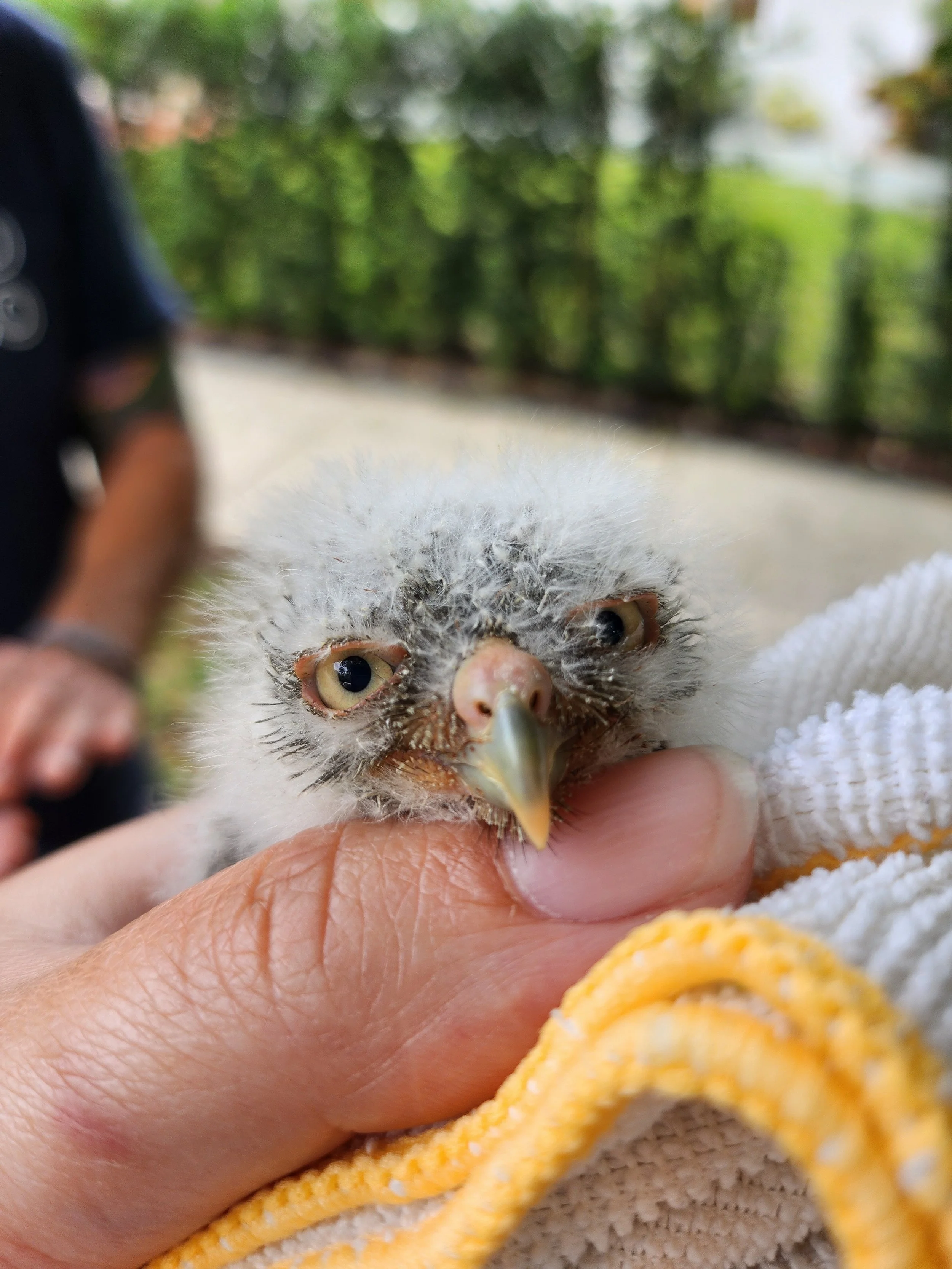
Alt text: A baby Eastern Screech Owl being held by a human hand.

Caption: A baby Eastern Screech Owl.


Mammals

The most common mammals admitted were 566 Virginia Opossums and 207 Grey Squirrels. The intake of opossums has increased since 2023. These opossums usually come in groups. If a mother is hit by a car and has babies in her pouch, there could be ten baby opossums admitted that day. 


April and August were the months with the greatest mammal intakes. Squirrels have two breeding seasons: spring and fall. Opossums breed year-round, but there is sometimes an increase in the spring months.


Reptiles

PHSS receives relatively few reptile intakes — 31 in 2023 and 25 in 2022 — but there were 35 intakes in 2024. There is no pattern regarding reptile intakes by month, but there were six intakes in July 2024. Most reptile breeding seasons are in the spring, while the Cooter’s breeding season is year-round. Reptiles usually cross the road and get hit by a car. People often pick the reptiles up or move them, thinking something is wrong when they could have just helped the reptile cross the street.


The most common reptile was the Gopher Tortoise, with 11 admitted. These tortoises are federally protected and cannot be released until PHSS receives special permission from the Florida Fish and Wildlife Conservation Commission (FWC). The FWC lets us know where the tortoise can go, whether it is back in the wild or to a holding site, before the tortoise is ready for release. Gopher Tortoises do well, but they stay with PHSS for a long time as we wait for FWC instructions. 


Reasons for Admission

Trauma was the biggest reason for admission in 2024, with 949 intakes. This ranges from being hit by a car to being attacked by cats or dogs. The most common reason for trauma was 104 cat interactions. Miami has a lot of feral cats, and many people have their cats outside. These cats attack these animals and injure them. There were 79 intakes for physical trauma. In these cases, the animal will come in with wounds or signs of trauma, but we do not know exactly what happened to them. Window strikes, the cause for 56 intakes, happen frequently during migration. Many birds migrate at night and become disoriented by sound and light pollution, causing them to collide with walls and buildings.

Alt text: Before and after pictures of an ovenbird. In the before picture, the ovenbird’s eye and head are swollen, causing its eye to be half-shut. In the after photo, the swelling is gone and the ovenbird has an open eye.

Caption: An ovenbird that flew into a window and suffered bad trauma. His head and eyes were swollen and infected. He was on laser therapy, oxygen therapy, and medication supportive care. After a few days, his swelling went down dramatically. His eye was able to open, and he was able to be released. 

In 2024, 719 patients were admitted for sickness or weakness. This category includes conditions like a general weakness or botulism poisoning. 671 patients were admitted for being orphaned or a baby. These patients were either orphaned or fell from the nest and couldn’t be reunited with their parents, so PHSS kept them to raise. There were 55 cases of trapped or entangled animals, often resulting from fishing line and hook-related injuries. 


Diagnosis and Treatment

646 radiographs were taken in 2024. This is helpful to look for fractures and any abnormalities. Approximately 657 patients received laser therapy. With different settings, this therapy increases oxygen coming into the wounded area. Red light promotes healing and growth, while the blue light setting helps kill bacteria and fungus. There is also a setting to help with pain and inflammation. Approximately 625 patients received oxygen therapy, and approximately 191 patients received a splint or wrap. Over 400 surgeries/procedures were conducted in 2024. 

Alt text: Radiograph of an injured hawk with a pin.

Caption: A hawk with a fracture in its elbow. Our vet put a pin there to speed up the healing process. 


2025 and the Future

As of September 25, 2025, PHSS has treated 46,881 patients in its 45-year history. This year, we have treated 2084 patients and 104 patients are currently in our care, with 120 species having been treated.


If you find an injured animal, read our list of tips and contact a licensed wildlife rehab. PHSS is open every day from 9 AM to 5 PM, so please call or text 305-751-9840 for help.

No Longer a Myth...

By: Carolina Labro, Wildlife Rehabilitator

Years of scientific research have discovered that animals use tools not only to find food, but also to build nests, for defense and even to enhance comfort. They have discovered that the use of tools does not imply special intelligence, as it was commonly believed, but in some species is a process of simple learning by associations in the environments, acquired by observing other animals. In other cases, it is due to genetic programming or instinct. 

Below are some interesting examples:

  • Several species of Herons have shown a behavior called “bait fishing”. They pick a morsel of food, a small piece of bread or even a small stick with their beak and place it in the water to attract fish. ( American Fish Crows have shown this behavior as well)

  • Burrowing Owls accessorized their homes with dung from nearby animals like horses and dogs to attract dung beetles (not exactly a tool but very clever!)

  • Weaver ants use their larvae to produce silk that glues together the leaves from which they wave their nests. 

  • The Bolas Spider makes a ball from the same silk it uses to spin a web. When an insect flies by, they throw it and it attaches to the insect because it's sticky and they reel them in. 

  • The Brown-headed Nuthatch uses its beak to break off bits of wood then uses it as a tool to pry up tree bark and expose the insects hiding beneath. 

  • The Sea Otter will strike mollusk shells against rocks to get at the food inside.

  • Octopuses have been observed carrying around coconut shells to hide in and turning them into instant shelters to protect from predators.

Nature is full of interesting creatures!

A Brown-headed Nuthatch with a fresh meal

A Black-crowned Night Heron “bait fishing”

Keeping Your Dog and Our Wildlife Safe!

Written by: Meredith Molinari, Wildlife Intern

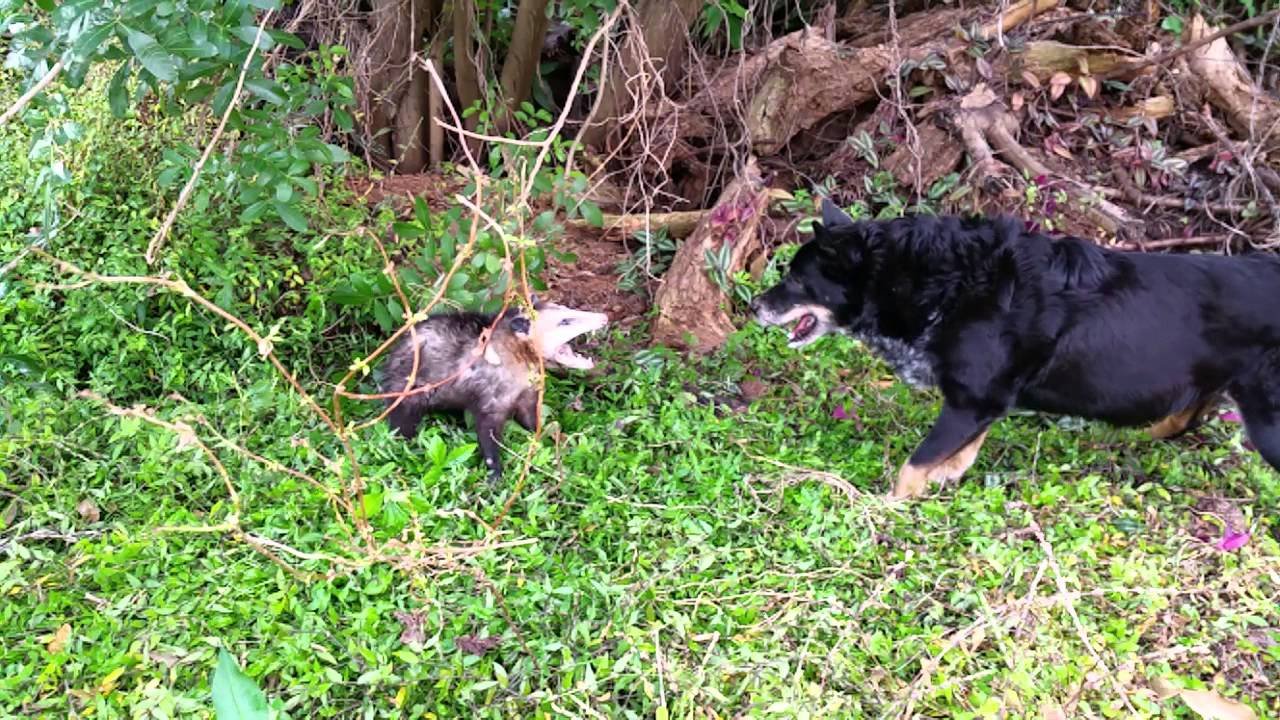
With the weather in Miami finally cooling down a bit, it’s a great time to enjoy some outdoor fun with your furry family member. Picture this. You and your pup are having fun playing fetch in the park when suddenly, they spot something more interesting than that tennis ball. They dart away from you, and before you can yell stop, they have a small feathery or furry creature in their mouth. Oh-no! 

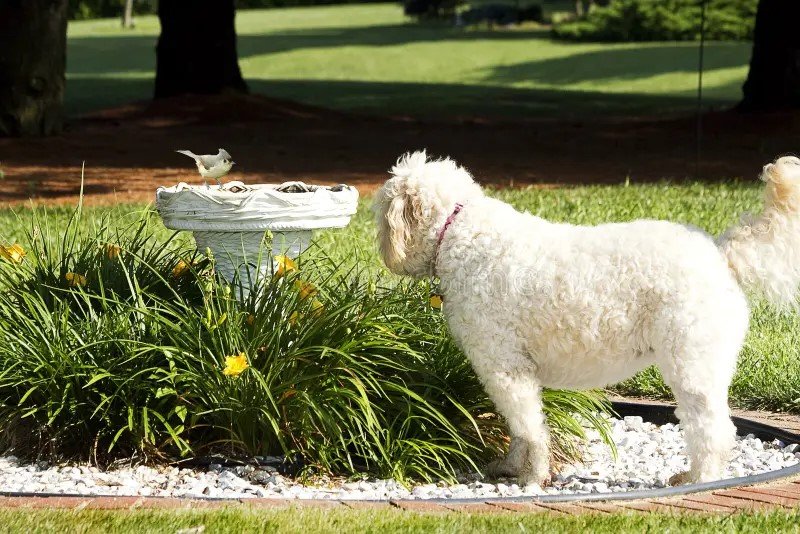
In my time as an intern with Pelican Harbor Seabird Station, I have seen numerous opossums and birds come in with wounds resulting from a dog attack. It is not the dog’s fault. Although they are domesticated animals, they still have wild instincts. As we are lucky enough to be surrounded by amazing wildlife here in South Florida, it is our job as dog owners to keep both our pets and our native wildlife safe. 

As the owner of three dogs, I know how necessary it is for dogs to get outside and run off some energy. It is important for both their physical and mental health. Since not everyone has access to a fenced-in backyard, local parks are a great option. 

Here are some easy safety tips to follow when taking your dog to the park: 

  1. Always check park regulations. Many county parks in Miami-Dade do not allow dogs. While this might be annoying to dog owners. It is often for the benefit of the surrounding wildlife. Dogs can easily disturb ground nesting sites. The presence of dogs can cause serious anxiety in prey animals and disrupt their breeding and migratory behavior. 

  2. If dogs are allowed in the park, follow posted leash laws. Always keep your dog on-leash. No matter how good you believe your dog’s recall is, instinctive behavior is hard to break when their prey drive is heightened.  A leash of no more than 6 feet in length is best. This gives the dog space to walk while keeping them close enough, should you need to remove them from an area quickly. Carry high-reward treats in your pocket or bag while leash-walking in the park. This way you can redirect your dog’s attention if they focus on a smaller prey animal. 

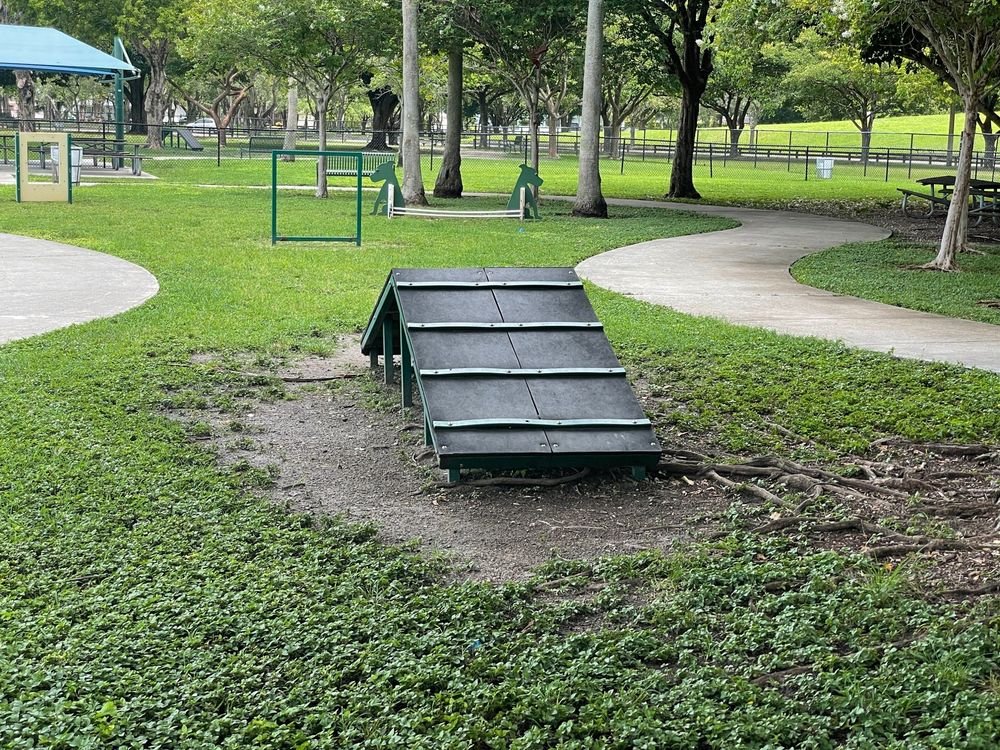
  3. The best park option is a dog-friendly park or off-leash “Bark Park.” These parks are specifically designed with dogs in mind. They are placed in park locations away from wild areas limiting interaction with the native species. You can find links to dog-friendly parks at the end of this post. 

What about at home? Wildlife often appears in our own backyard. These tips ensure your dog, and our native wildlife can peacefully coexist. 

  1. Never leave food outside unattended. Especially overnight. Until I began interning at Pelican Harbor, I had no idea what a tasty treat pet food is to opossums. They absolutely love it. By leaving food out during the day for your dog to munch on, you might be unintentionally inviting opossums into your yard after dark. Always dispose of uneaten pet food in trash cans with secure lids.

  2. Think carefully about where to place your birdbath and feeders. I love having a bird feeder in my yard where I can admire the Blue Jays, Mourning Doves, and Northern Cardinals that stop by and visit. Position your bird feeder in an area of the yard that your dog cannot easily reach. Remember, squirrels love bird feeders too, and can be easy prey for dogs. Keep the area below the feeder clean. Do not allow your dog to ingest bird seed or bird droppings that accumulate below the feeder, as they may contain bacteria that will make your dog sick.

  3. Make sure your dog is up to date on all their vaccinations. This is the best preventative step you can take for your dog’s health. 

Even if you follow all these precautions, accidents can happen. If your dog attacks native wildlife, Pelican Harbor Seabird Station is here to help. They have multiple resources on their website for your benefit. Start with their page: “what to do if you found an injured animal”

Play safe outdoors and take your pup to a dog-friendly park or off-leash Bark Park! My favorite is at Tropical Park. It has two separate areas for large and small breed dogs. Hopefully, my energetic goldendoodle and I will see you and your furry bestie there some Saturday morning.

Check out: Dog Friendly parks in Miami-Dade County. 

Photo Descriptions & Sources

Nature's Boxy Girl

Written By:  Carolina Labro, Wildlife Rehabilitator 


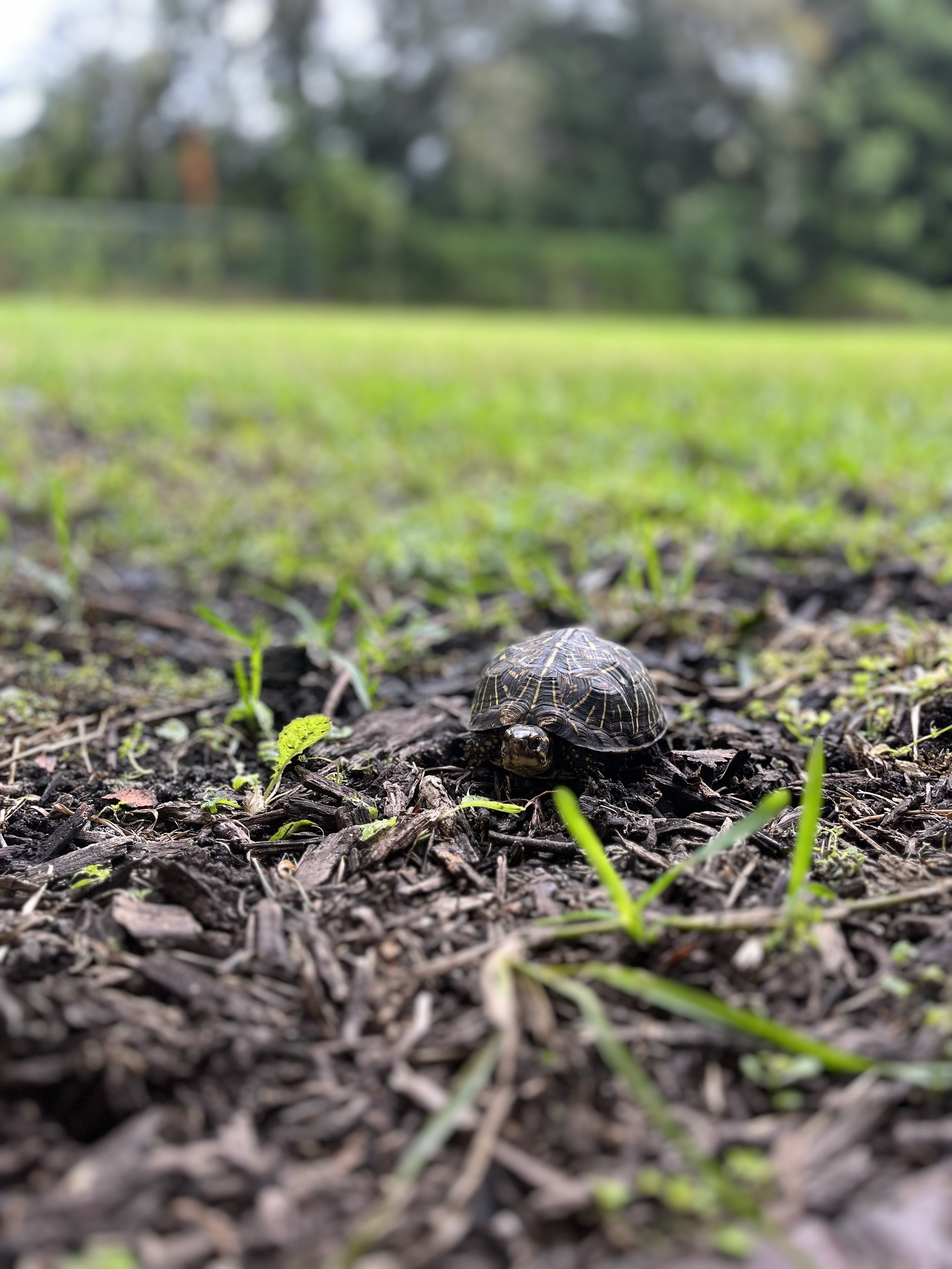
About a year ago, as I was going out to my backyard in the morning, I saw a little turtle resting on the mat outside the sliding door. I was astonished to find this little creature there. I approached her to examine her more closely, thinking to myself, “Why are you here?” And I noticed that it was munching on a worm! As soon as I picked her up, she retracted into her perfectly tight sealed box. After getting her checked out by a wildlife veterinarian, it was confirmed that she was a young female Florida Box Turtle and most likely in the middle of breakfast when I found her. 

I brought her back and placed her near the bushes at the back of my house, where she raced back into hiding. I still see her from time to time, having a feast on a type of rounded leaf moss in the corners of my garden. On rainy days she goes after every earthworm scattered over the patio, and I’ve even spied on her enjoying a good soak in a small puddle of water. When I don’t see her for a while, I imagine her embarking on one of her adventurous voyages around the garden, exploring and enjoying herself. 

I’m so delighted that a Box Turtle has decided to make my backyard her home, and we invite you to go outside and take a look around to appreciate the uniqueness and diversity of nature. You will not be disappointed! 

Fun Facts:

  • Box turtles generally live for 25-35 years but have been known to survive to over 100 years old!

  • Box turtles have a great internal GPS and even use the stars to help them navigate

  • Eastern Box turtles are homeowners of 2 or more residences that serve them as nesting sites, summer or overwintering vacation destinations!

  • Box Turtle hatchlings are born with an external yolk sac that provides the hatchlings with nourishment during its first days of life. This allows them to be completely independent from parental care!

  • They are omnivores! They love earthworms, snails, slugs and a wide variety of plants.

  • Besides using visual cues, Box Turtles have a highly developed sense of smell that helps them with recognizing potential love interests or even intruders!